The 8ᵉ Baromètre du dialogue social, conducted by Ifop Opinion, explores the state of mind of employees, staff representatives and management.
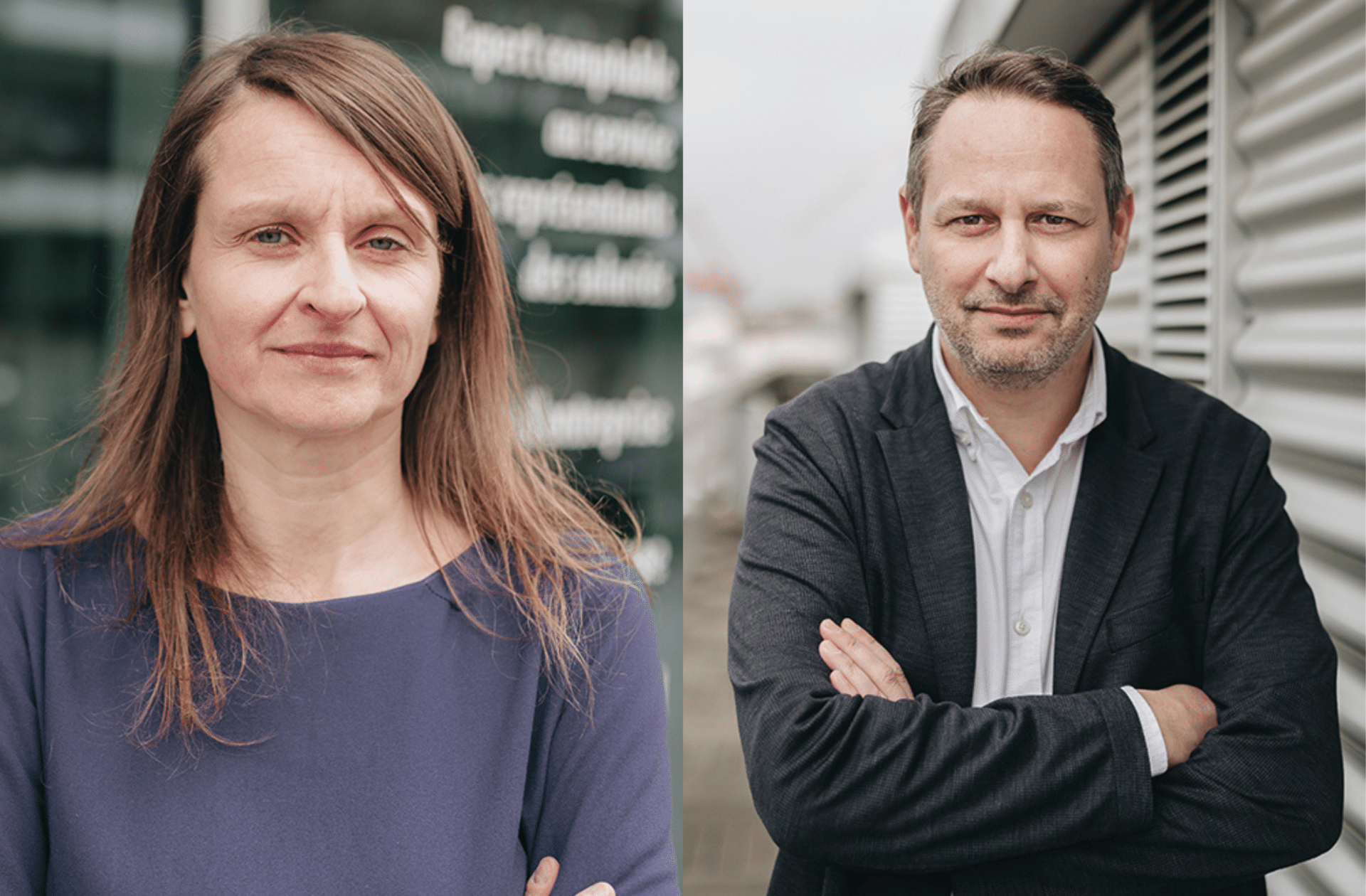
In this interview, Claire Morel and Nicolas Weinstein, both members of Syndex’s management committee analyze the main findings and share their recommendations for a more constructive social dialogue, including on emerging topics such as the ecological transition and AI.
Claire Morel and Nicolas Weinstein
Question 1: This 8ᵉ wave of the Social Dialogue Barometer takes place against a particularly shifting economic and social backdrop. What do you think are the most striking findings of this edition on the state of mind of employees, staff representatives and management?
Claire Morel: This latest edition shows that, despite this highly uncertain climate, and a growing proportion of Social and Economic Committee (CSE) representatives (61%) worried about their company’s economic situation, they remain determined and motivated. And what this year’s barometer also tells us is the reasons behind this strong commitment: defending employees’ rights, acting for greater fairness, improving working conditions.
These motivations resonate perfectly with the very positive image of the CSE held by employees (67%) and managers alike. A very large majority consider it to be useful in defending employees’ interests and working conditions, and in voicing realities on the ground. This perception is accompanied by a high level of confidence and a feeling of good representation, confirming their central role in the company. They are recognized as interlocutors by both employees and management.
But their mandate remains a difficult one. Lack of time, overload of subjects, multiple skills to master: elected representatives are under pressure, and the disadvantages of the CSE body are still prevalent. The skills acquired by elected representatives are little valued in their professional careers, and many of them find that being an elected representative hinders their remuneration and careers (74%).
Question 2: The barometer highlights the sometimes contrasting perceptions of social dialogue among company players.
How does Syndex analyze these differences, and what do they say about current expectations in terms of recognition, trust and the role of the CSE?
Nicolas Weinstein: It’s true that perceptions of the quality of social dialogue are quite mixed. Management continues to rate it positively (7.7/10), while employees (5.9/10) and employee representatives (5.1/10) give it much lower marks.
This structural discrepancy can be explained by the fact that CSE elected representatives feel that their opinions are not taken into account, and that they are not listened to. The CSE does not carry the strategic weight desired by elected representatives and employees, despite strong recognition of its usefulness.
Expectations are clear, from both employees and employee representatives. They concern the desire to be consulted on work and the way in which it is carried out, as well as a better sharing of decision-making power within the company. The real need of employees and elected representatives to have a say in decisions that concern them is both pressing and legitimate.
“The issues of working conditions and value sharing remain key to quality social dialogue: they are the priorities of both employees and employee representatives.”
Claire Morel
Member of the Syndex Management Committee
Question 3: In the light of these results and the outlook for the years ahead, what do you see as the priorities for strengthening social dialogue that is more constructive and more in tune with changes in the workplace?
Claire Morel: There are already three proposals: strengthen the weight of CSE opinions, create spaces where employees can evaluate and improve their work, and give staff representatives the means to exercise their prerogatives properly and guarantee local social dialogue, as close as possible to the reality on the ground, so as to always be relevant and in tune with employees.
Working conditions and the sharing of value remain key to quality social dialogue: they are priorities for both employees and employee representatives. Discussions within the CSE and negotiations that have substance and concrete proposals, and whose implementation is monitored, are clearly part of the ongoing challenges of social dialogue.
Finally, social dialogue concerning the ecological transition and the introduction of AI is a must. These are already a reality for a number of sectors. For others, it needs to be anticipated, properly understood and properly assessed, particularly where AI is concerned. And yet, as we can see from the barometer, these issues are still struggling to emerge. Their impact on the organization of work and employment, on the business model of companies, and on employee training must become the subject of social dialogue.