
As digital sovereignty gradually gains prominence in public discourse, Google Cloud sought to understand how the French people actually perceive this issue.
While digital sovereignty is rarely mentioned off the cuff as a priority, it becomes a central concern when it comes to security, sensitive data, and protection against cyberattacks. The study also reveals strong expectations for cooperation between global technology companies and their French or European counterparts.
In this interview, Benoît Tabaka, General Secretary of Google France and Director of Institutional Relations and Public Policy for Google in Southern Europe, discusses these findings and how they can help shape the concept of digital sovereignty.
Benoît Tabaka
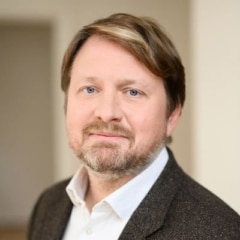
General Secretary of Google France and Director of Institutional Relations and Public Policy for Google in Southern Europe
At a time when issues of digital sovereignty are gaining increasing prominence in public debate, what led Google Cloud to seek a better understanding of how the French public views this topic today?
The debate on digital sovereignty has intensified, but it remains largely confined to experts, institutions, Brussels, and Paris. We wanted to hear what the French people actually think rather than just make assumptions. Since we work with large public and private companies as well as small and medium-sized enterprises, their concrete expectations matter more to us than the battle of words. There are specific expectations to meet, and sovereignty is a matter of degrees and nuances—not an all-or-nothing proposition.
“Rather than sovereignty in principle, the French expect, above all, sovereignty in practice: Does this actually protect me?”
Benoît Tabaka
General Secretary of Google France and Director of Institutional Relations and Public Policy for Google in Southern Europe
The study reveals an interesting contrast: digital sovereignty is rarely mentioned spontaneously as a top priority, but it becomes a very concrete concern as soon as the discussion turns to sensitive data, security, or protection against cyberattacks. What does this discrepancy tell you about how French people’s expectations of digital industry players are evolving?
Digital sovereignty is far less central to citizens than the debate would suggest: only 4% rank it as the most important form of sovereignty, far behind economic or food sovereignty. But it becomes very concrete—and very demanding—as soon as we touch on issues such as health data, tax data, or protection against cyberattacks. Security is, in fact, the top criterion for the French when choosing a technological tool: 57%.
Rather than sovereignty in principle, the French expect, above all, sovereignty in practice: does this actually protect me? The French also recognize the lead that international players have in innovation and speed, while perceiving a slight advantage for French players when it comes to security.
For a technology provider, the message is clear: we are judged on what we guarantee, not on our nationality. This is precisely why, at Google Cloud, we focus on verifiable guarantees: from outsourced management of encryption keys, geographic restrictions, and data control, to a company incorporated under French law and operating in France, with SecNumCloud certification issued by ANSSI: S3NS, resulting from our partnership with Thales.
Nearly three out of four French people believe that a partnership between global technology companies and French or European players can help strengthen digital sovereignty—a view that is even more pronounced among those under 35. How do you think this expectation of cooperation could change the way digital sovereignty is viewed in France and Europe?
This is a very interesting finding. Nearly three out of four French people—and 85% of those under 35—believe that a partnership between global players and French or European players strengthens sovereignty. They reject the choice between “Fortress Europe” and forced dependence.
This should shift the debate. There are two ways of conceiving sovereignty: one involves building walls; the other involves making choices—and enabling those choices through an open approach—by localizing what is sensitive and opening up what needs to be opened up. The French instinctively lean toward the second option. They want both autonomy and efficiency, and they have understood that cooperation is the way to reconcile the two. The younger the respondents, the more pronounced this pragmatism becomes.
In practical terms, this is what we’re doing with S3NS and Thales: harnessing the power of a global cloud under the French flag, with one goal in mind—to ensure that everyone can choose the right level of sovereignty in an open and scalable way.