To coincide with the publication of the “digital serenity” barometer, carried out with Occurrence, the Ifop Group talks to Jonathan Leyva, CEO of Konica Minolta.
In this interview, he looks back at the genesis of this collaboration, shares the key findings on the digital maturity of SMEs and ETIs, and deciphers the new challenges facing managers. Between management, resilience and skills development, he outlines the conditions for transforming digital technology into a controlled and sustainable lever for performance.
Jonathan Leyva, CEO of Konica Minolta
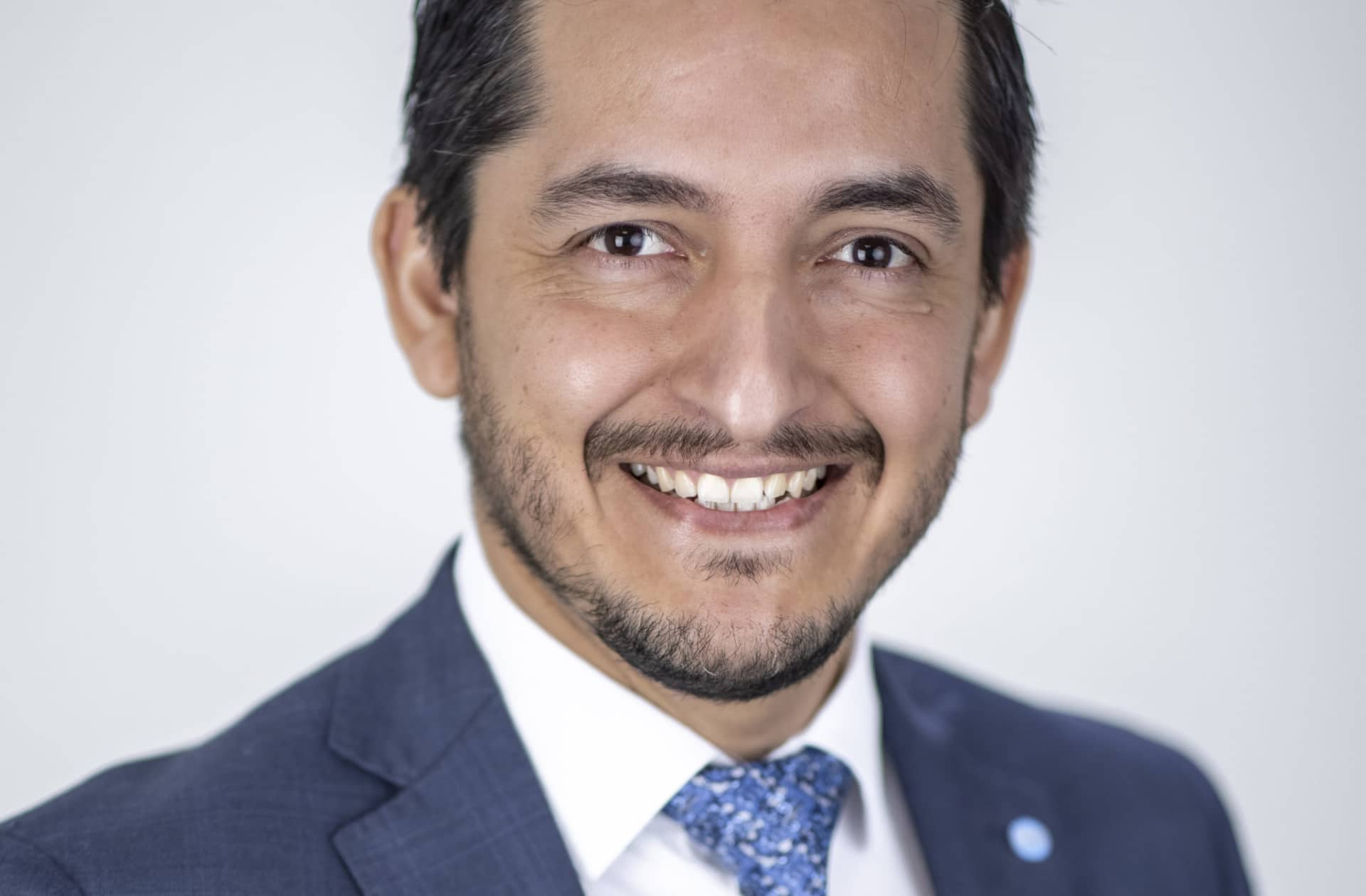
“Digital serenity is precisely that moment when technology ceases to be submissive and becomes fully controlled.”
Jonathan Leyva
CEO of Konica Minolta
Question 1: You chose to work with Occurrence on this project on “digital serenity”. What prompted you to launch this two-part project, and what message did you want to get across to managers: particularly in technology, what are we really talking about when we speak of “serenity”?
What made you want to launch this project?
Konica Minolta has profoundly transformed its business to support companies well beyond printing, with global digital solutions. But one conviction guides our action: digital is not just a question of technology, it’s first and foremost a question of management, uses and decisions.
On closer inspection, we came to a simple conclusion: a lot of talk, but little useful data, and above all a vision too focused on large companies. But in reality, it’s SMEs that make up the French economy.
So we wanted to give them a voice once again. That’s what this barometer is all about, built in conjunction with Occurrence (Ifop group), to provide a clear, independent reading that’s rooted in reality. Year after year, we have broadened our focus – to include ETIs, new sectors, and now healthcare and social services – to better reflect the diversity of digital trajectories.
Basically, our ambition is simple: to get away from the anxiety-inducing discourse surrounding digital technology. In the face of constant acceleration, we wanted to put one key idea back at the center: “digital serenity”.
What message would you like to convey to managers?
Digital technology has become essential for managers: it represents both a tremendous lever of opportunity and a source of pressure in the face of the growing complexity of the choices to be made and the investments to be made.
Our message is simple: digital transformation is not just about technology. It depends on strategic decisions, clear priorities and the ability to involve teams over the long term.
Today, the difference is no longer in access to technological tools, but in the ability to master them.
It is also essential to remind managers that they are not alone in the face of this complexity. Digital serenity cannot be decreed: it has to be built, through management, tools, but also choices and the partners with whom we move forward.
Particularly in technology, what are we really talking about when we speak of “serenity”?
When we talk about serenity in technology, we’re not talking about comfort, or simply ease of use. Above all, it’s about control.
Mastery of an environment that has become more complex, faster and more exposed. Control over choices, priorities and risks.
Digital serenity is precisely that moment when technology ceases to be subjected to and becomes fully controlled.
It’s the ability, for a manager, to know where he’s going, to make informed choices, to secure his data, to get his teams on board – without being under constant pressure or having the feeling of chasing after digital technology.
Question 2: There’s been a lot of talk about “digital transformation” in recent years. If you take a step to the side, what has changed in the nature of the challenge: have we moved from a challenge of equipment and tools to a challenge of continuity, resilience and collective ability to move forward?
Yes, clearly. Digital transformation is no longer a question of equipment, but of the ability to endure.
Digital technology has become a condition of continuity: it engages resilience, security and the ability of companies to adapt in an unstable environment.
The real question is no longer “are we equipped? but “are we ready? – in the face of cyber-risks, AI, regulatory changes or tensions over skills.
We’ve moved from a logic of tools to a logic of maturity, which is as much about governance, organization and team alignment as it is about technology.
Today, digital transformation is above all a question of resilience and management.
Question 3: If you had to set a course for SME and ETI managers over the next 2-3 years, what would be the triptych of priorities for gaining serenity (in decisions, organization, skills), and what responsibility should digital players assume to make this course tenable?
If I were to outline a direction for the next two to three years, it would revolve around three priorities.
First, we need to structure real digital governance. Even today, too many companies claim to be serene without a formal strategy. But serenity cannot be based on an impression: it has to be built with a clear roadmap, priorities and the right level of management.
Secondly, strengthen security and business continuity. Digital is now at the heart of performance: cybersecurity, compliance, technological dependencies… These have become issues of solidity, not just efficiency.
Finally, invest in skills. Transformation is not about tools, but about teams’ ability to understand and use them. AI is a good example of this: the issue is no longer adoption, but adoption with framework.
And this clearly raises the responsibility of digital players. Their role is no longer simply to equip, but to support: to help make decisions, to structure, to secure. In short, to make the transformation truly tenable.
Basically, the right triptych is: better decisions, better protection, better onboarding. And our collective responsibility is to make this course attainable.